
Beneath the Noise Still Flows a River of Good News
Our attention spans have collapsed under the weight of too much input. I think the term used today is “TikTok mind.” We jump from headline to headline, outrage to outrage, clip to clip, rarely sitting with any one thought long enough to absorb it.
When attention fractures, the brain looks for shortcuts. We lean into bias. We cling to what feels familiar. And for some reason, negativity rises to the top. Danger captures attention faster than delight. Fear outpaces wonder.
So we live in a kind of low-grade hypervigilance—overstimulated, overwhelmed, and mentally drained.
No wonder we hear so much about disasters and so little about miracles.
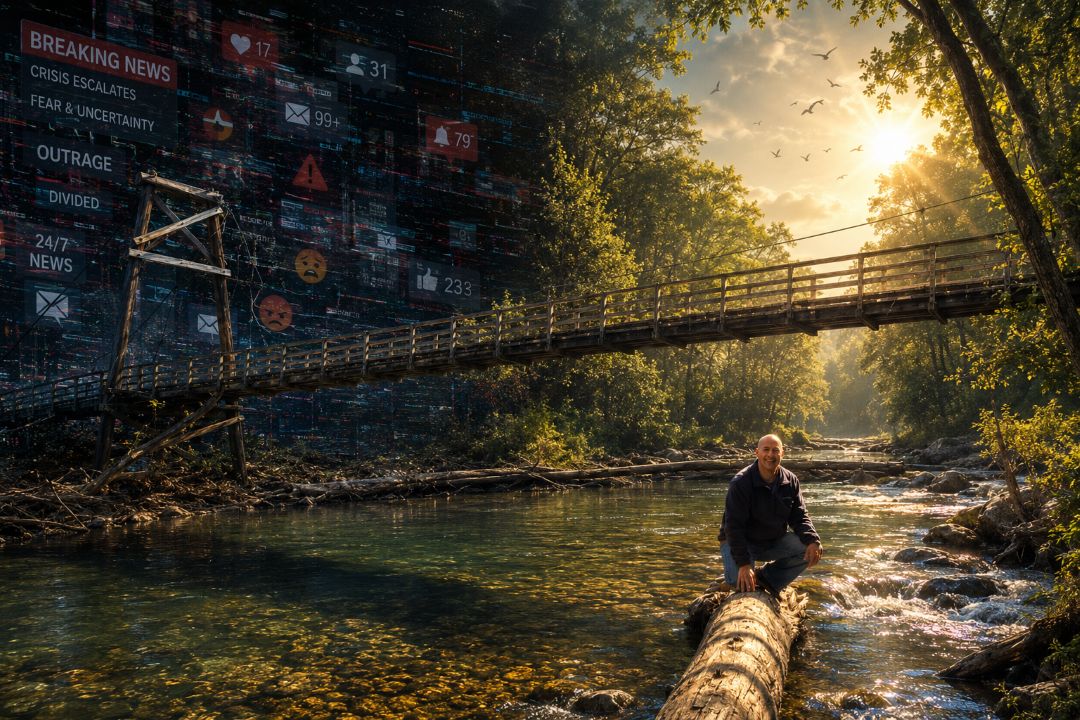
Overwhelmed by information, starved for attention, and addicted to apocalypse, we’ve grown blind to the extraordinary. We’re losing our ability to experience awe and wonder. Yet hidden beneath the noise and chaos is a rushing river of good news, beauty, discovery, and possibility.
I stopped watching television in the early 80s because I wanted to renew my mind, as Romans 12:2 puts it. I wanted to start putting better things into my mind instead of filling it with noise and junk all day long. Back then it was mostly television, radio and movies. Today it’s much harder. The internet, social media, notifications, outrage, and endless streams of information all compete for attention every waking moment.
Looking back, I think I instinctively understood something important: whatever continually fills your mind eventually shapes how you see the world. If all we consume is outrage, fear, conflict, and noise, eventually we lose our ability to recognize beauty, goodness, awe, and wonder when they appear right in front of us.
Some people get overwhelmed by advancing technology. Personally, I find it fascinating.
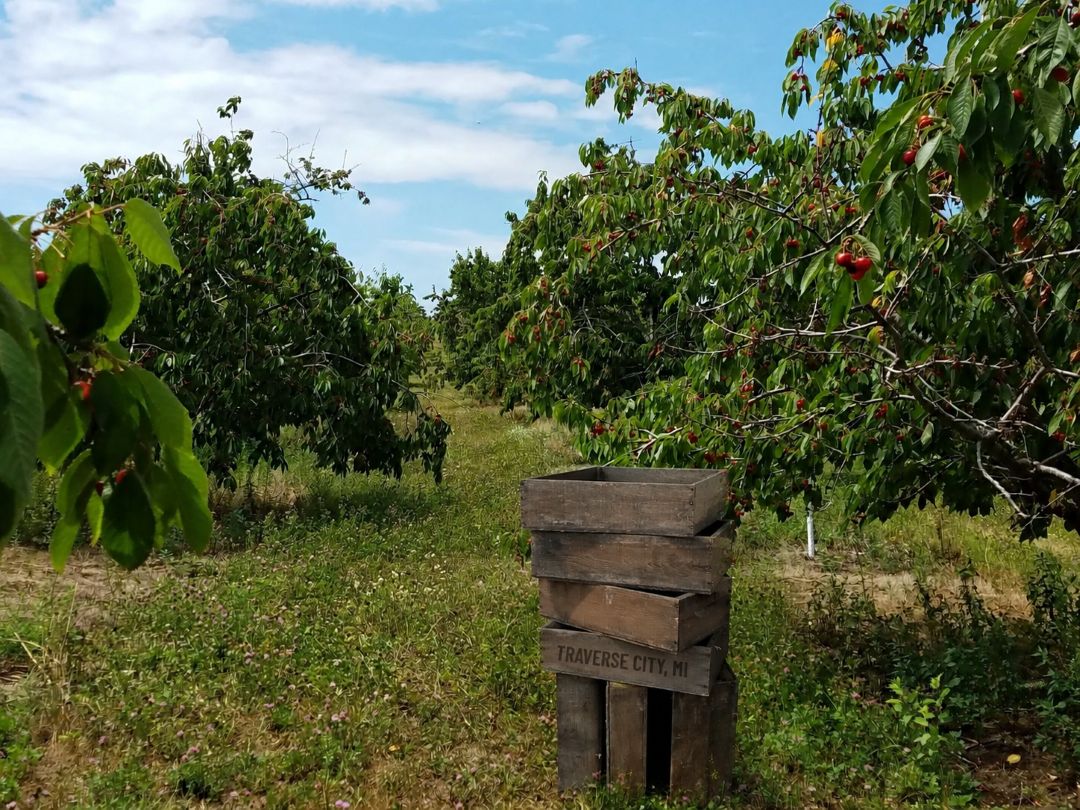
I remember spending summers as a kid on the family cherry farm in Michigan. One summer I earned enough money picking cherries to buy my first ten-speed bike—a Schwinn Traveler III. I rode that bike from the 70s into the mid-90s.
Cherry picking back then was done by hand. Lots of hands. I wasn’t paid by the hour, but by the lug—a wooden crate of cherries. I wore a harness with a metal bucket so both hands were free for picking. I worked alongside cousins, aunts, uncles, and migrant workers who came north during harvest season.
Over time, the tools changed. Buckets, ladders, and lugs slowly gave way to the cherry shaker.
The cherry shaker could do in minutes what once took many hands much longer. It grabbed a tree and shook it until cherries fell onto a giant canvas below, rolling onto conveyors and into holding tanks before heading off for cooling and processing.
The need for pickers diminished, but new roles emerged—shaker operators, truck and tractor drivers, mechanics, tank skimmers. Technology changed the work, but it expanded what was possible.
Looking back across history, the pattern repeats.
Canals moved water where it once wasn’t. Horses multiplied human mobility. Sails harnessed the wind and expanded transportation and trade. Again and again, simple tools transformed scarcity into abundance.
What once seemed impossible slowly became inevitable.
That’s still what fills me with awe.
The joy of discovery.
The thrill of possibility.
Curiosity. Wonder.
But navigating today’s flood of information requires discernment. More than ever, you must become your own gatekeeper. You must guard your mind.
Not every voice deserves your attention.
Not every algorithm deserves your trust.
Not every crisis deserves your emotional energy.
Somewhere between a book I was reading and writing this, my mind wandered. I realized I had never really thought about where fresh water comes from.
The earth is mostly salt water—oceans.
Yet we have springs, rivers, rain, aquifers, wells, glaciers—fresh water sustaining life everywhere. Salt water evaporates, leaves the salt behind, forms clouds, falls as rain, filters through earth and stone, and returns again as fresh water.
I must have missed that day in science class growing up.
But when I stopped to think about it, I found myself fascinated.
That feeling—that sudden return of curiosity and wonder—feels increasingly rare. Maybe that’s what we’re losing beneath all the noise.
The world is still astonishing.
There are breakthroughs, discoveries, acts of kindness, beauty, healing, creativity, and quiet miracles happening every day. But if we constantly feed our minds fear, outrage, division, and distraction, we stop noticing them.
Guard your mind.
Protect your sense of wonder.
And seek out that rushing river of life and good news flowing beneath the noise.