
Skeletal Muscle Health: The Missing Link to Living Well Longer
But muscle is much more than that.
Skeletal muscle is one of the most important organs in your body when it comes to how well you age, how your brain functions, and how healthy the rest of your body stays over time.
It’s not just about looking fit.
It’s about staying capable, resilient, and living life well.
What Is Skeletal Muscle (Really)?
But under the surface, it’s doing far more:
- It helps regulate blood sugar
- It stores and uses energy
- It acts like a reservoir for nutrients (especially protein)
- It communicates with other organs, including your brain
- It plays a major role in metabolism and disease prevention
In simple terms:
Healthy muscle helps your whole body work better.
Why Muscle Matters More As You Age
This is called Sarcopenia, and it can start earlier than most people think.
What makes it dangerous is that it doesn’t just affect strength.
It affects:
- Balance and mobility
- Metabolism and weight gain
- Blood sugar control
- Brain health
- Risk of chronic disease
Many of the health issues we associate with aging—like Type 2 Diabetes, heart disease, and obesity—often have roots in poor muscle health long before symptoms show up.

A Wake-Up Call I Didn’t Expect
Over the years, I’ve spent way too much time sitting—and eventually, I started to feel it.
One day I noticed how hard it was just to climb a set of stairs.
That got my attention.
Like I tend to do, I started digging into it… and I came across something called Gluteal Amnesia.
Basically, my glutes had forgotten how to do their job.
And just to keep me honest, my wife had already been pointing out that I had no butt.
She wasn’t wrong.
So I went to work figuring out how to turn those muscles back on—simple movements, activation exercises, being more intentional about how I move.
And I’m happy to say… they’re working again.
But that experience stuck with me.
Because it showed me how fast things can go in the wrong direction if you’re not paying attention.
The Real Problem: Most People Are “Under-Muscled”
But a better question might be:
Do you have enough healthy muscle?
You can be:
- Normal weight
- Overweight
- Even “fit looking”
…and still not have healthy muscle.
I’m also seeing this more and more with people using the newer weight loss drugs.
Yes, they’re losing weight.
But many are also losing muscle along the way.
And that creates a different set of problems down the road.
The Two Things That Build and Maintain Muscle
There are really only two main levers:
- Use Your Muscles
If you don’t use muscle, you lose it.
Simple as that.
You don’t need a complicated program. Start with:
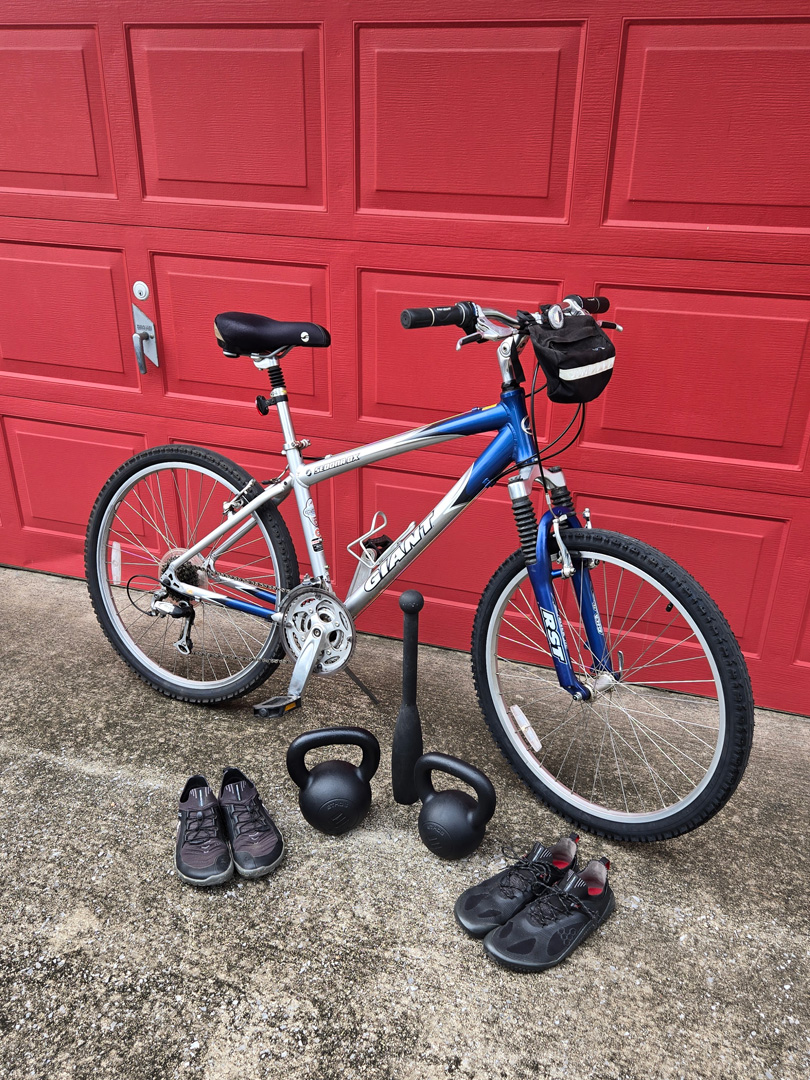
- Walking every day
- Getting up and moving often
- Bodyweight exercises (squats, push-ups, lunges)
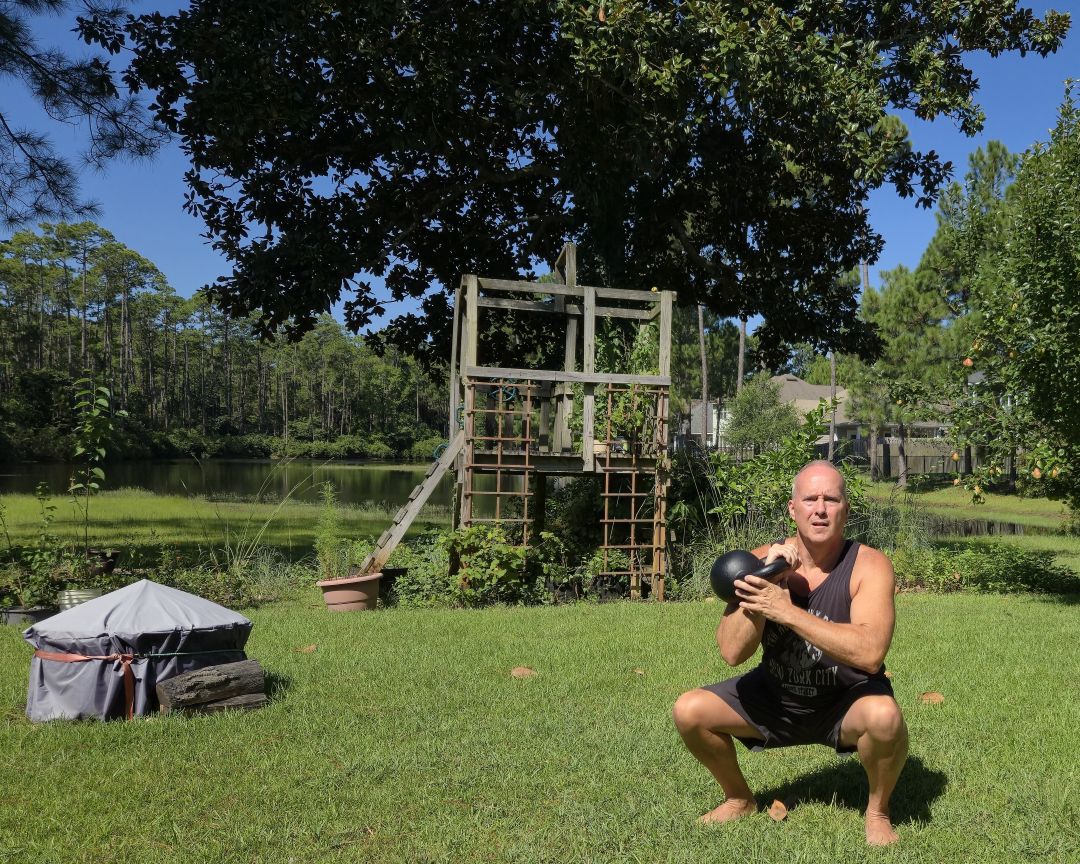
- Kettlebell workouts (great for strength and movement)
Even a couple of short strength sessions each week can make a real difference over time.
Your body was designed to move—and it responds when you do.
- Feed Your Muscles (Protein Matters)
Muscle isn’t just built in the gym.
It’s built in the kitchen.
One of the biggest takeaways from the science—and from what I’ve seen personally—is this:
Most people don’t eat enough protein to support muscle health.
A simple target:
- Aim for roughly 1 gram of protein per pound of ideal body weight per day
- Spread across meals
- Try to get 30–50 grams per meal
Why this matters:
Protein provides the building blocks your body needs to repair and maintain muscle.
Without enough of it, your body will start breaking down muscle to meet its needs.
What About Carbs and Fat?
A simple approach:
- Prioritize protein first
- Add whole-food carbohydrates based on activity (fruit, vegetables, some starch)
- Include healthy fats
One helpful way to think about it:
You earn your carbs through movement.
The more active you are, the better your body handles them.
Simple Habits That Protect Your Muscle (and Your Life)
- Walk daily
- Lift something a few times per week
- Eat enough high-quality protein
- Don’t sit all day
- Get good sleep
- Eat real food most of the time
Nothing extreme.
Just consistent.
Where It All Connects
Your body is constantly repairing, adapting, and responding to what you do—and what you give it.
Movement and nutrition are two big pieces of that.
But underneath it all, there’s also communication happening at the cellular level—how your body senses, responds, and repairs itself.
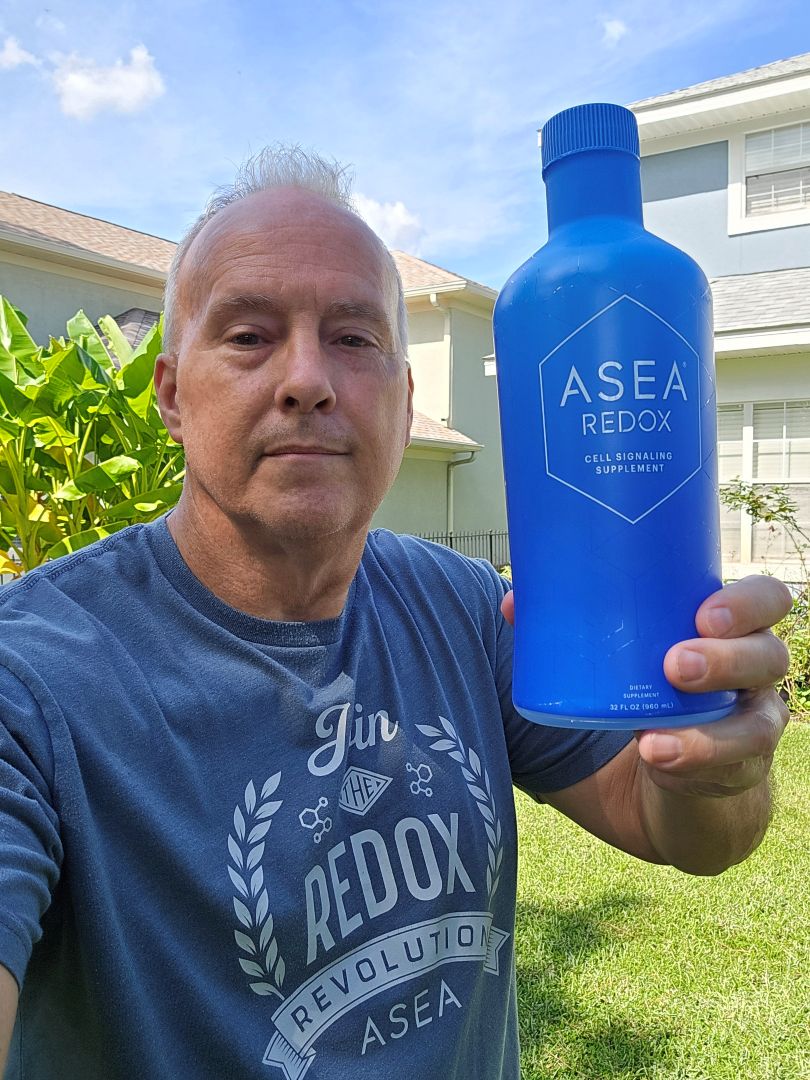
That’s one of the reasons I’ve used ASEA over the years.
Not as a replacement for the basics, but as something that supports the body’s own signaling and repair processes.
Because at the end of the day, it’s not just about what you do…
it’s about how well your body can respond to it.
Final Thought
But the body responds to simple, consistent inputs.
Use your muscles.
Feed your muscles.
Keep doing it as you age.
Because in the end…
Strong, healthy muscle isn’t about looking better.
It’s about living better—for longer.