

The Symphony Inside You
I’ve been thinking a lot about the human body lately.
Partly because life has a way of making you stop and think.
Recently, one family member spent three days in the hospital. Another was told she has irregular skin cells on her face and neck that need to be dealt with.
Thankfully, neither situation appears to be life-threatening, but both reminded me how quickly our attention turns to the body when something doesn’t seem right.
It also reminded me how mysterious the human body can be.
We know what health feels like.
We know when something hurts.
But what exactly is happening inside us? Why does the body work so beautifully most of the time, and why does it sometimes seem to struggle?
Those questions sent me back through years of reading, learning, and writing. I found myself revisiting subjects like sleep, movement, sunlight, nutrition, stress, cellular energy, NAD⁺, redox signaling molecules, and something researchers call allostatic load—the wear and tear that can build up as our bodies continually adapt to life’s challenges.
The interesting thing is that, although those topics seem very different, they all point toward the same idea.
The body isn’t just a collection of individual parts.
It’s a beautifully coordinated system.
As a musician, that’s a comparison I’ve made for years.
I’ve spent much of my life singing and playing guitar. One of my favorite roles has always been backing up vocalists and songwriters—adding harmony, rhythm, and texture that helps the song come alive.
I’ve often thought the human body works the same way.
Not because every part is identical.
But because every part has something important to contribute.
A symphony doesn’t become beautiful because every musician plays louder than everyone else.
It becomes beautiful because every instrument knows its part, listens to the others, and contributes something unique.
The more I’ve learned about the human body, the more I’ve come to believe something very similar is happening inside each of us.
Right now, while you’re reading these words, your heart is keeping a steady rhythm.
Your lungs are quietly exchanging oxygen.
Your immune system is watching for trouble.
Some cells are producing energy.
Others are sending messages.
Others are repairing tiny bits of yesterday’s wear and tear.
Most of it happens without us ever noticing.
Without applause.
Without recognition.
It’s simply life doing what life has been designed to do.
Maybe we’ve spent too much time thinking of our bodies as machines.
Machines are impressive.
But machines don’t heal.
Machines don’t adapt.
Machines don’t learn from yesterday so they’re better prepared for tomorrow.
Living things do.
Maybe our bodies are less like machines…
…and more like a symphony.
Every Symphony Needs Energy
The musicians may know every note by heart. Their instruments may be perfectly tuned. The conductor may be standing at the podium, ready to begin.
But without energy, there is no concert.
The same is true inside our bodies.
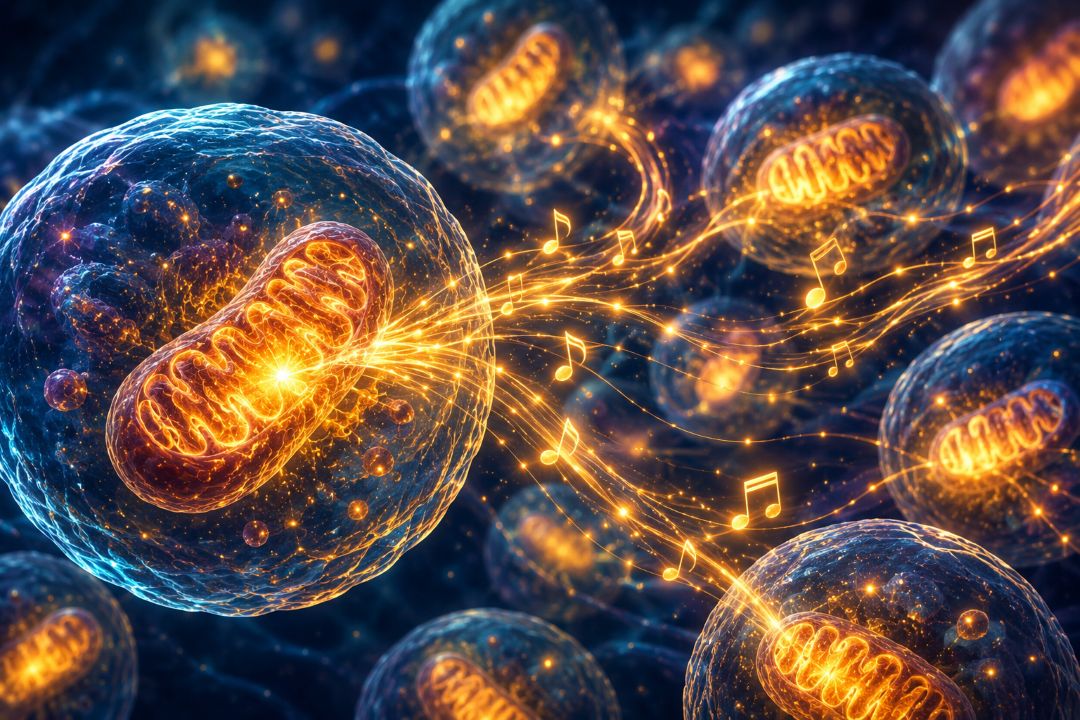
Deep inside nearly every cell are tiny structures called mitochondria. They’re often described as the “powerhouses” of the cell, but I think of them more like thousands of little power stations, quietly producing the energy that allows life to happen.
Every heartbeat.
Every thought.
Every breath.
Every step you take.
Every cell repairing itself while you sleep.
All of it depends on energy.
One of the remarkable molecules involved in this process is called NAD⁺.
Scientists have known about NAD⁺ for more than a century, but in recent years it has received renewed attention because of the many roles it plays inside our cells. It helps convert the food we eat into usable energy and supports important repair systems that help maintain healthy cells throughout our lives.
Researchers have also discovered that NAD⁺ levels naturally decline as we age and may be affected by chronic stress, illness, and lifestyle.
It’s easy to understand why people are excited about that research.
Without energy, the orchestra simply can’t perform.
But as important as energy is…
It isn’t the whole story.
Every Musician Has to Listen
Every instrument is perfectly tuned.
Everyone is rested.
Everyone is ready.
The lights come up.
The conductor raises the baton.
Now imagine they can’t hear one another.
The violin begins too early.
The trumpet misses the conductor’s cue.
The percussion section speeds ahead.
Every musician has energy.
But the music falls apart because communication has been lost.
That image formed in my mind as I thought more about redox signaling molecules.
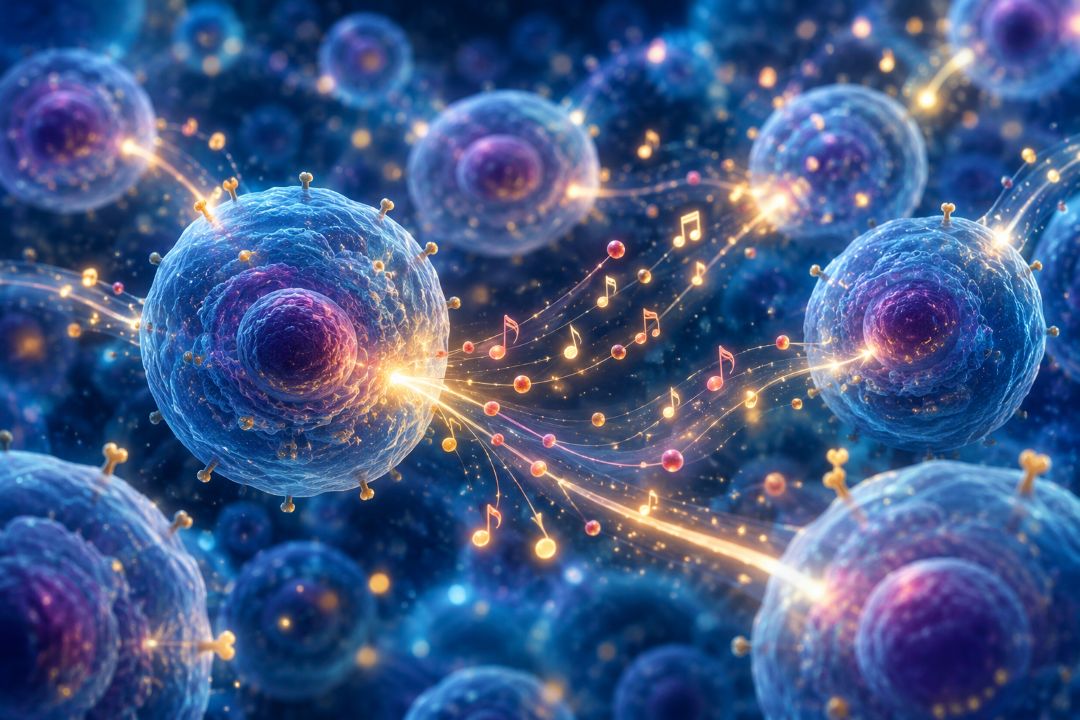
These tiny molecules are part of the body’s natural communication system. They help cells send and receive messages—when to protect, when to repair, when to recycle damaged components, and how to respond appropriately to changing conditions.
Your cells don’t simply need fuel.
They need information.
They need timing.
They need coordination.
In many ways, health isn’t just about having enough energy.
It’s about making sure every part of the orchestra can still hear the music.
The Music Goes On
Halfway through the performance, one violin string breaks.
A musician misses a note.
The conductor slows the tempo ever so slightly.
The brass section softens to give another instrument room to recover.
The audience may never notice.
The music continues.
That’s one of the remarkable things about living systems.
They aren’t fragile machines that stop working the moment something changes.
They’re constantly adjusting.
Every day, our bodies adapt to thousands of small challenges.
A poor night’s sleep.
A difficult workout.
Too much sunshine.
A scraped knee.
A stressful conversation.
A virus we never knew we encountered.
Even the simple act of standing up from a chair causes countless tiny adjustments throughout the body.
Scientists sometimes describe this ongoing process as maintaining homeostasis—keeping the body’s internal environment within healthy limits. But life is rarely perfectly balanced. We aren’t statues sitting in controlled environments.
We’re living in a changing world.
That’s why researchers also talk about allostasis—the body’s ability to adjust, respond, and find a new balance as life changes around us.
When those demands become too frequent or too intense, the accumulated strain is known as allostatic load.
I find that fascinating.
It reminds me that health isn’t about avoiding every challenge.
It’s about remaining adaptable.
The body is continually asking,
“What’s happening now?”
“What needs attention?”
“What can wait?”
“How do we restore balance?”
Every heartbeat, every breath, every immune response, every repaired cell is part of that ongoing conversation.
Which brings us back to the symphony.
An orchestra doesn’t succeed because every performance is perfect.
It succeeds because the musicians are constantly listening, adjusting, and responding to one another.
The same seems to be true inside us.
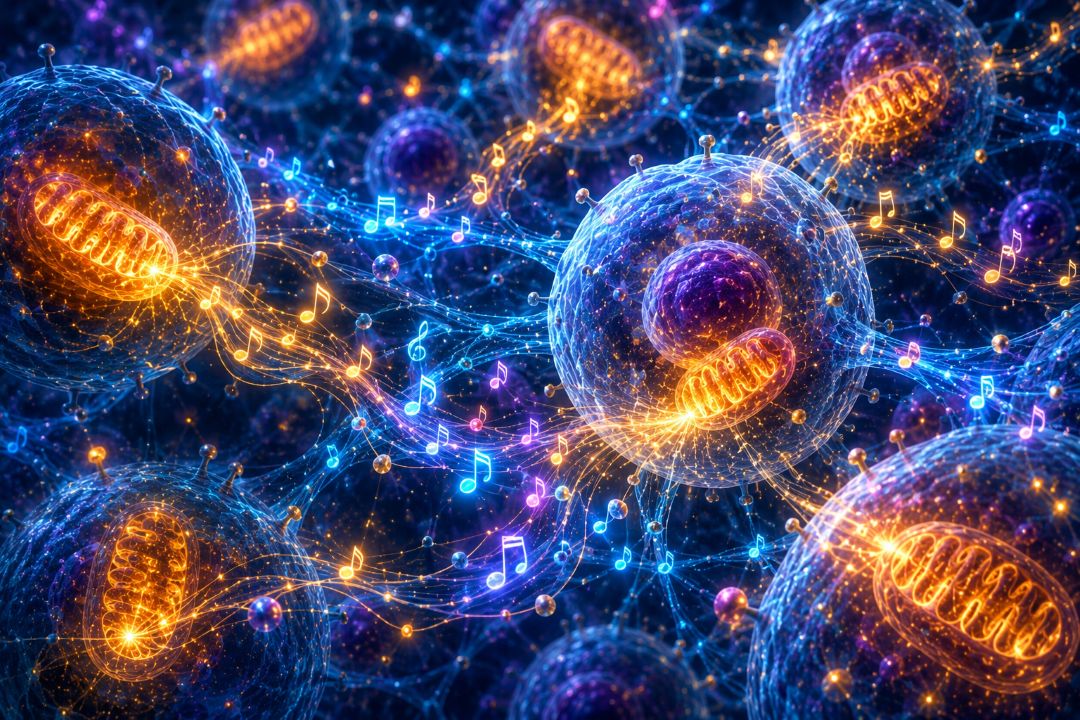
Energy powers the performance.
Communication keeps everyone playing together.
Adaptation allows the music to continue.
A Few Tools in My Own Wellness Toolbox
The truth is, I don’t believe there’s a shortcut.
Nothing replaces the fundamentals.
Real food.
Movement.
Quality sleep.
Time outdoors.
Healthy relationships.
Managing stress.
Those are the foundation. They’re the instruments every symphony depends on.
That said, I do have a couple of supplements that have earned a place in my own wellness toolbox.
One supports the body’s communication systems through redox signaling molecules.
The other supports cellular energy by helping maintain healthy NAD⁺ levels.
I can’t tell you exactly what they’ll do for you because every body is different. But they’ve become part of my own daily routine, and I believe they’re worth learning about.
If you’re curious, I’ve written much more about both of them, and I’ve included links below if you’d like to explore the science and decide for yourself.
Redox Signaling and NAD+ Work Together to Support Healthy Aging »
Exercise, Sleep, Nutrition — and Why Supplements Still Matter for Healthy Aging »